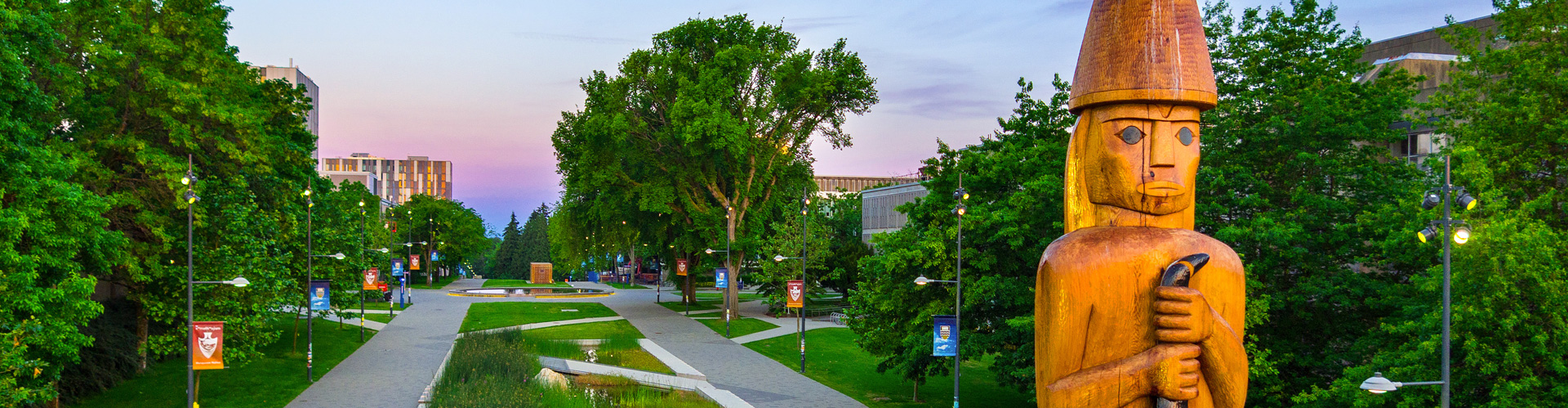
Helping to improve health and wellness for Indigenous populations and communities is a key priority for UBC and the Faculty of Medicine.
The Indigenous MD admissions program, Indigenous Family Medicine Residency Program, and certificate programs in Indigenous Public Health are just some of the ways the Faculty of Medicine is helping to increase the number, and retention of, Indigenous health professionals in B.C. and across Canada in response to the report of the Truth and Reconciliation Commission of Canada’s Calls to Action.
Our medical school is now training more Indigenous doctors than ever before, with more than 160 Indigenous medical student graduates since 2006 and a growing number completing residency training in communities across the province.
An increasing number of Indigenous learners are also training in our Health Professions programs, including Midwifery, Genetic Counseling, Occupational Therapy, Physical Therapy, Speech-Language Pathology, Audiology and Medical Laboratory Science.
Through their work in communities in B.C. and across the country, faculty, staff and learners are helping to build a health care system that is more accessible, inclusive, representative and equitable.
Response
- UBC Faculty of Medicine Response to the Truth and Reconciliation Commission of Canada’s Calls to Action
- Watch the webcast
Initiatives
- First Nations Health Authority Chair in Cancer and Wellness at UBC
- Indigenous MD admissions program
- Physical Therapy, Indigenous Health
- Midwifery Program, Indigenous Students
- Indigenous Family Medicine Residency Program
- Graduate Certificate or Certificate in Indigenous Public Health
- Centre for Excellence in Indigenous Health
- Indigenous Initiatives Speakers Series
Stories

A Sacred Commitment to Truth and Reconciliation: From Generation to Generation
Derek K Thompson – Čaabať Bookwilla | Suhiltun, Hereditary Chief and Director of Indigenous Engagement, reflects on family, history and the responsibility in reconciliation.

UBC Medicine community members honoured by Indigenous Physicians Association of Canada
Drs. Shannon Waters and Denna Flett are recognized for advancing Indigenous health and strengthening the wellbeing of Indigenous peoples across the country.

Walking the path to medicine together
This spring, 10 new Indigenous doctors celebrated their graduation from medical school at UBC

Addressing forced resilience: Indigenous experiences with genomic medicine in B.C.
New research examines how systemic barriers in health care shape Indigenous families’ views about genomic medicine.

‘Trust is medicine’
In Stellat’en First Nation, UBC medical students are learning what it means to provide holistic, culturally sensitive care — with patients as their teachers.

Bringing an Indigenous perspective to internal medicine
A new residency training pathway at UBC is building capacity to support the diverse needs of Indigenous patients across British Columbia

UBC’s seed2STEM honoured with City of Vancouver’s Leadership in Reconciliation Award
The seed2STEM summer program is creating culturally safe pathways for Indigenous high school students to participate in STEM research.
With gratitude, we acknowledge that the University of British Columbia Faculty of Medicine and its distributed programs, which include four university academic campuses, are located on traditional, ancestral and unceded territories of Indigenous peoples around the province.
We respectfully acknowledge that the UBC Vancouver-Point Grey academic campus is located on the traditional, ancestral, unceded territory of the xʷməθkʷəy̓əm (Musqueam), and UBC operations in Vancouver more generally are also on the territories of the Skwxwú7mesh (Squamish) and səl̓ilwətaɁɬ (Tsleil-Waututh).
We respectfully acknowledge that the UBC Okanagan academic campus is situated on the traditional, ancestral, unceded territory of the Syilx Okanagan Nation.
We respectfully acknowledge that the University of Northern BC Prince George campus is located on the traditional territory of the Lheidli T’enneh, who are part of the Dakelh (Carrier) First Nations.
We acknowledge and respect the Lək̓ʷəŋən (Songhees and Xʷsepsəm/Esquimalt) peoples on whose territory the University of Victoria stands, and the Lək̓ʷəŋən and W̱SÁNEĆ peoples whose historical relationships with the land continue to this day.